Who should get the call?
Start with one number or several. Ring a front desk, a small team, a department or a mobile worker. Map business hours, transfers, voicemail and missed-call follow-up before choosing equipment.

BUSINESS VOICE / A PRACTICAL START
The right phone system is a call plan for your business—not just a row of handsets. Decide who answers, what happens when they cannot, and how customers reach the right person as your team changes.
Plan my phone systemAn inquiry starts a conversation. Equipment, carrier service, setup and support are scoped and priced separately.
When nobody is free: an agreed voicemail, fallback route or follow-up task.
What it looks like
Every call has a shape.
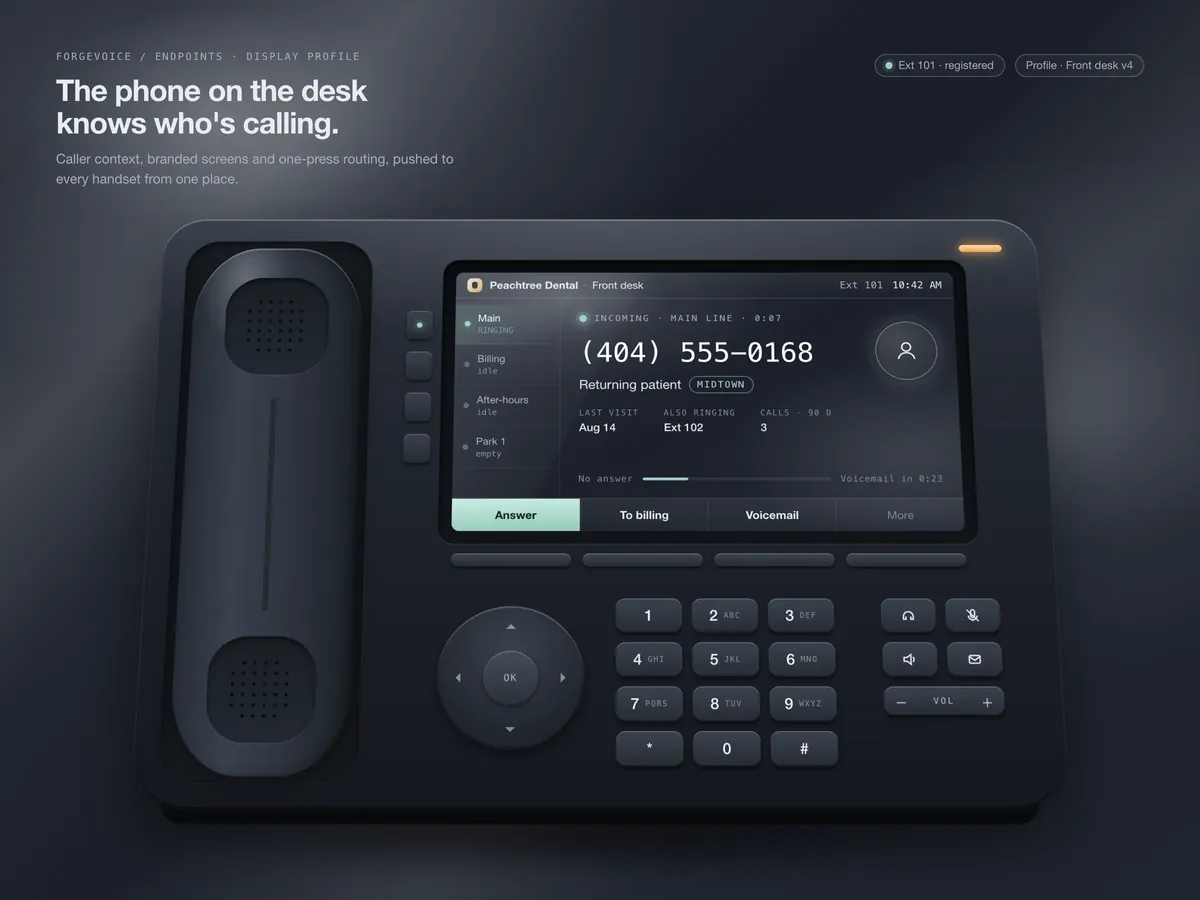
Sample screens · fictional data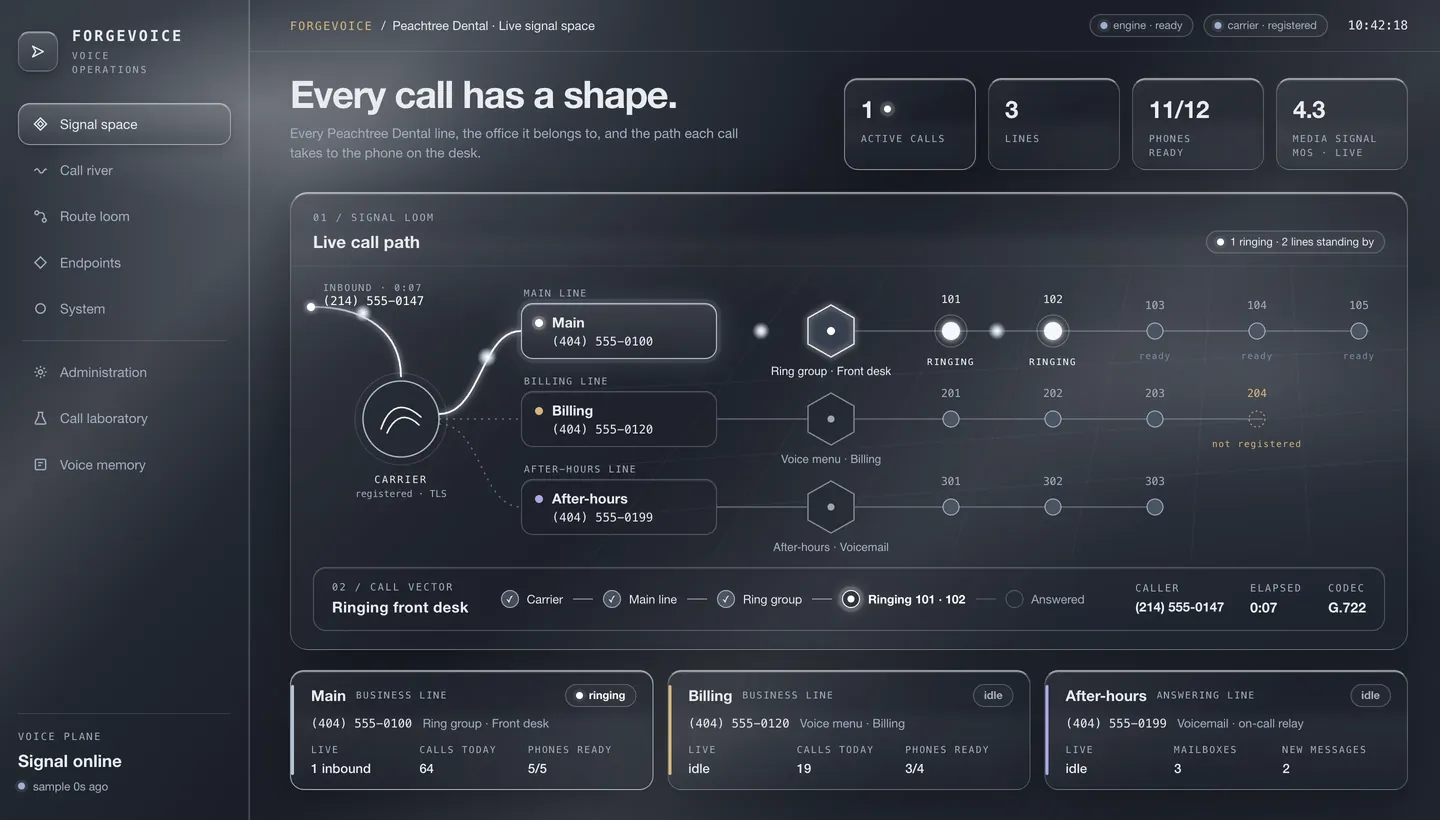
THE DECISIONS THAT MAKE IT WORK
Start with one number or several. Ring a front desk, a small team, a department or a mobile worker. Map business hours, transfers, voicemail and missed-call follow-up before choosing equipment.
Confirm who owns each number, what it takes to port it, and who pays the carrier. A proposed migration includes an agreed cutover and rollback plan; a port date is never assumed from a sales conversation.
Decide how calls should behave during a power, connectivity or provider outage. A fallback can be designed, but its operation must be tested with the chosen provider and site before anyone relies on it.
Existing compatible phones may be reusable. For a new deployment, we itemize phones, headsets, power, switches and any hosting or on-site appliance instead of assuming you already own a server.
PLAN / BUILD / SUPPORT
A business phone system built around how your team works. We plan your call routing, source the equipment, configure the system and test it with you.
People, locations, current numbers and the calls you need to handle.
Phones, hosting or on-site hardware, configuration and testing.
Self-managed, remote setup or an agreed ongoing support plan.
Compare the operating models and the quote checklist below.
HOSTED OR ON-SITE?
A separately scoped cloud system may avoid shipping a server. It still needs phones or compatible clients, a carrier, internet, security, backup and a clear monthly operating cost.
A local appliance may suit a site that wants equipment under its control. It adds hardware, power, backup, updates and a recovery plan. We can source the platform when you do not have one.
BEFORE YOU ASK FOR QUOTES
A useful comparison starts with your real call pattern instead of a vendor feature list. Write down these facts before choosing a platform or asking for pricing.
Count people separately from desk phones and estimate how many calls must happen at once. A large extension count with light call volume is different from a busy queue.
Record whether staff need Entra or another single sign-on, which users can move to a softphone, and whether mobile calling must present the business number.
List every number and current trunk. Decide whether the carrier should remain separate from the phone platform, and confirm the porting and rollback responsibilities in writing.
Separate essential routing, voicemail and queues from optional SMS, Teams integration, reporting and contact-center features so each quote can be compared fairly.
A $295 USD technology assessment can review one remote site or one workflow for up to 90 minutes and produce written priorities and a proposed next step. It is discovery, not a complete phone-system design, implementation or migration.
Read the scope, scheduling and refund terms before purchasing.
A QUOTE YOU CAN ACTUALLY REVIEW
A useful proposal shows the call flow, number and carrier responsibilities, compatible endpoints, setup labor, testing, handover, recurring charges and optional support. We agree on timing and availability after checking the actual parts and service path. A phone-only project is welcome; you do not have to buy a firewall or custom application to ask.
UrbanBytez is qualifying requests from Atlanta, Dallas and Houston, and welcomes inquiries from elsewhere in the United States. Work may be planned remotely; any on-site service, hardware shipping and delivery date require an individual quote. There is no walk-in office in those cities.
You can also email sales@urbanbytezllc.com. Do not send passwords, payment details or customer records.